February 10th, 2026
As we step into 2026, interior design is shifting toward spaces that feel deeply personal, expressive, and beautifully intentional. According to Architectural Digest’s latest forecast of trends that will shape how we live, homes are becoming canvases for texture, color, craft, and quiet artistic presence—moving away from décor that simply blends in and toward elements that resonate emotionally and visually.
In this installment of our “Picture This” series, we explore these emerging trends through the lens of our artists’ work, pairing each prediction with a piece that effortlessly embodies its spirit. From sculptural lighting and hand-infused surfaces to rich colors and craft-forward design, these artworks show how thoughtful art can elevate the way we live and feel in a space.
PICTURE THIS:
ARTISTIC IMPERFECTION
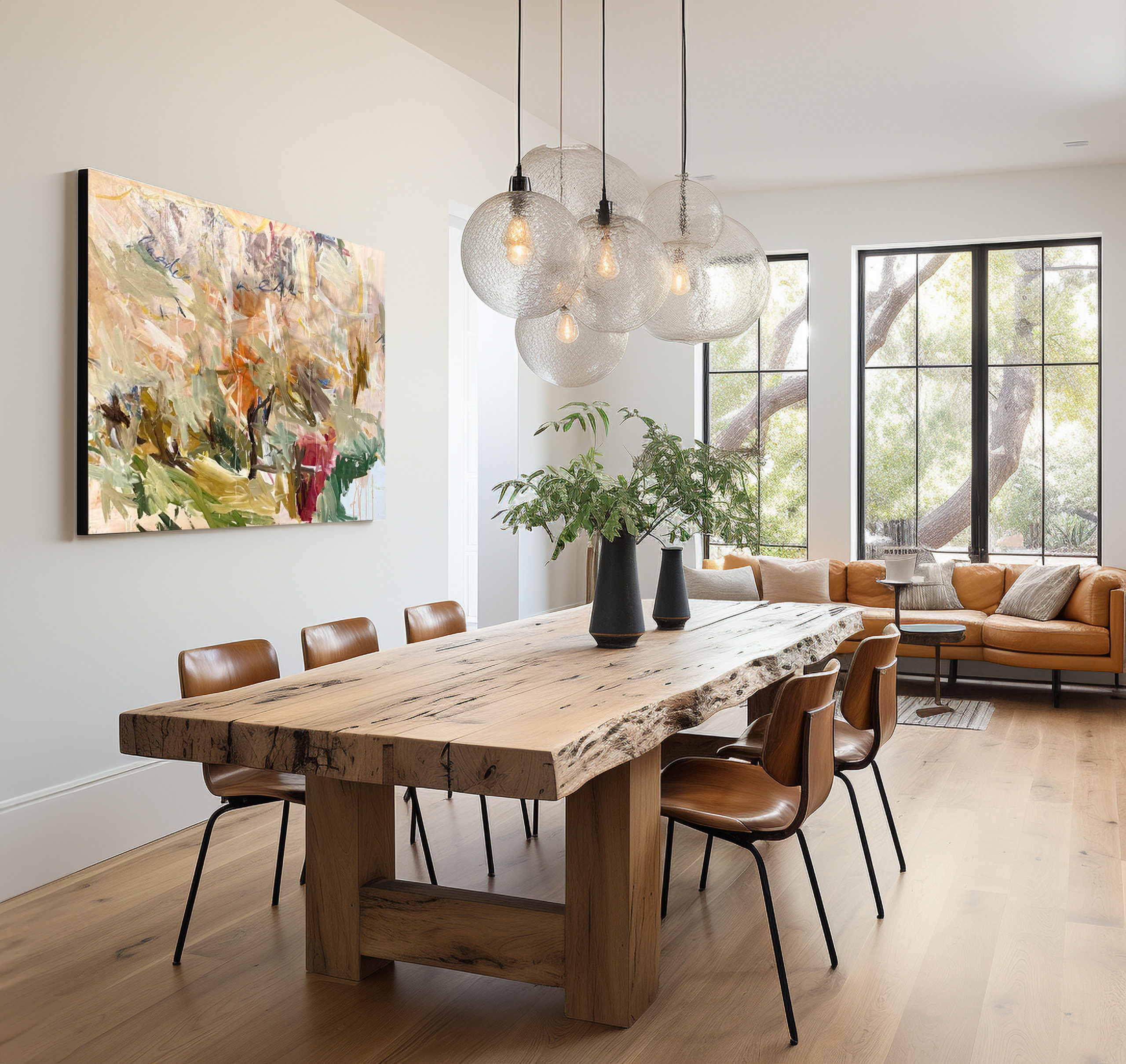
Stefan Heyer, “Rites De Passage,” mixed media, 48″ x 55″
Artistic Imperfection – Architectural Digest points to a growing embrace of “visible signs of the human hand” in 2026, where brushstrokes, irregular finishes, and tactile surfaces signal a quiet rebellion against overly polished interiors. Stefan Heyer’s mixed media work “Rites De Passage” channels this philosophy through sweeping, gestural strokes and layered textures that feel instinctive and emotionally charged, hallmarks of his practice rooted in what he once described as pulling on a “universal string.” Set within a light-filled, open dining environment, the painting’s vivid oranges, crimsons, emerald greens, and umbers animate the space, offering a counterpoint to its clean-lined furnishings and modern architectural details. Rather than striving for perfection, the work introduces a sense of lived-in authenticity, reminding us that the most compelling interiors are shaped by evidence of process, presence, and human touch.
PICTURE THIS:
STATEMENT LIGHTING TREATED AS SCULPTURE
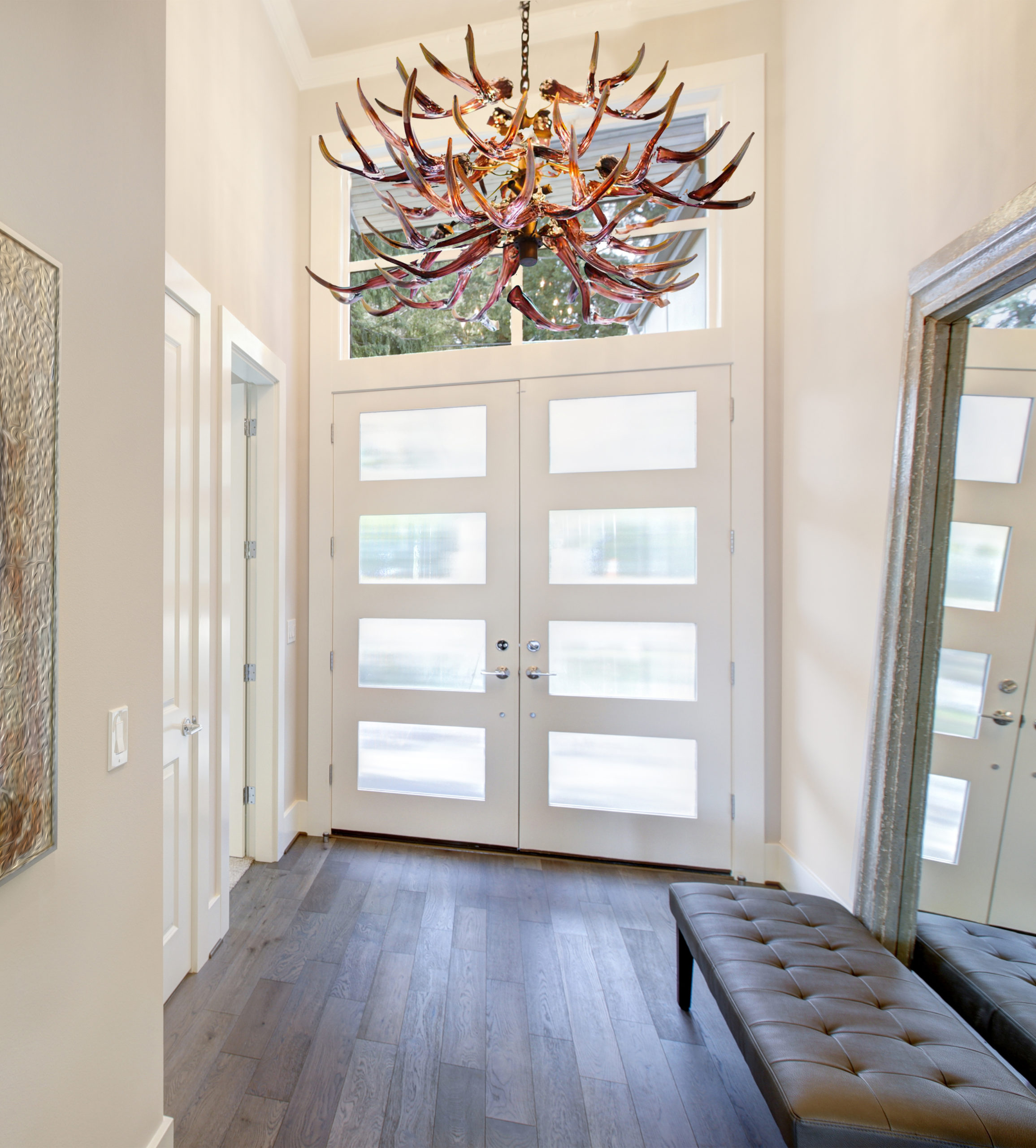
Jared and Nicole Davis, “Aubergine Chandelier,” glass, 26″ x 50″ x 50″
Statement Lighting Treated As Sculpture – Architectural Digest predicts that in 2026, lighting will be “designed to be seen as much as felt,” with sculptural fixtures that function as art objects and visually anchor a space through bold form, material, and motion. Jared and Nicole Davis’ custom glass antler chandelier embodies this shift, transforming the familiar language of lighting into a striking sculptural presence. Rendered in luminous amber and aubergine glass, the antler forms glow against a light-filled entry, their warmth amplified by surrounding brightness and reflective surfaces, while the artists’ ability to work in a wide range of hues allows for deeply personal interpretations. Rather than simply illuminating, the chandelier creates atmosphere and depth, aligning seamlessly with the 2026 vision of statement lighting as sculpture.
PICTURE THIS:
DUSTY JEWEL TONES WITH A MUTED FINISH
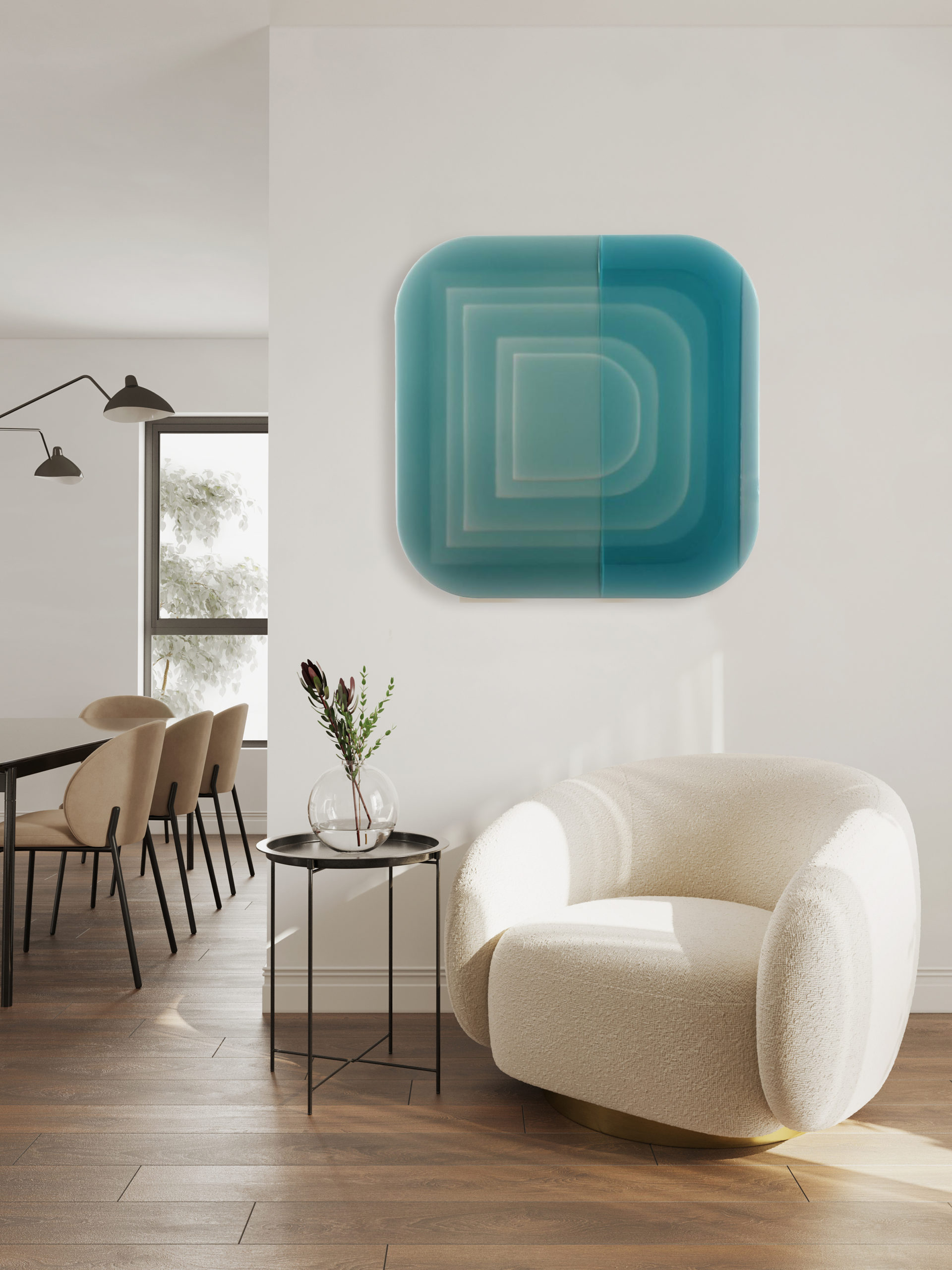
Lola, “Rising Tide,” resin, 40″ x 40″
Dusty Jewel Tones with a Muted Finish – Architectural Digest forecasts a shift toward jewel tones that feel softened and timeworn in 2026, favoring muted emeralds and subdued sapphires that build richness through restraint rather than saturation. Lola’s resin work “Rising Tide” embodies this sensibility through its layered construction and tonal subtlety, using a palette that evokes soft jade and weathered sea glass, gently shifting in hue across its geometric surface. In a light-filled, intimate living nook, the piece reads almost like a cut gemstone, its quiet luminosity enhanced by natural light and nearby textures. The result is moody without heaviness, expressive without excess, mirroring the way this emerging palette brings depth and nuance to contemporary interiors.
PICTURE THIS:
CRAFT FOCUSED DESIGN THAT DOESN’T SHOUT
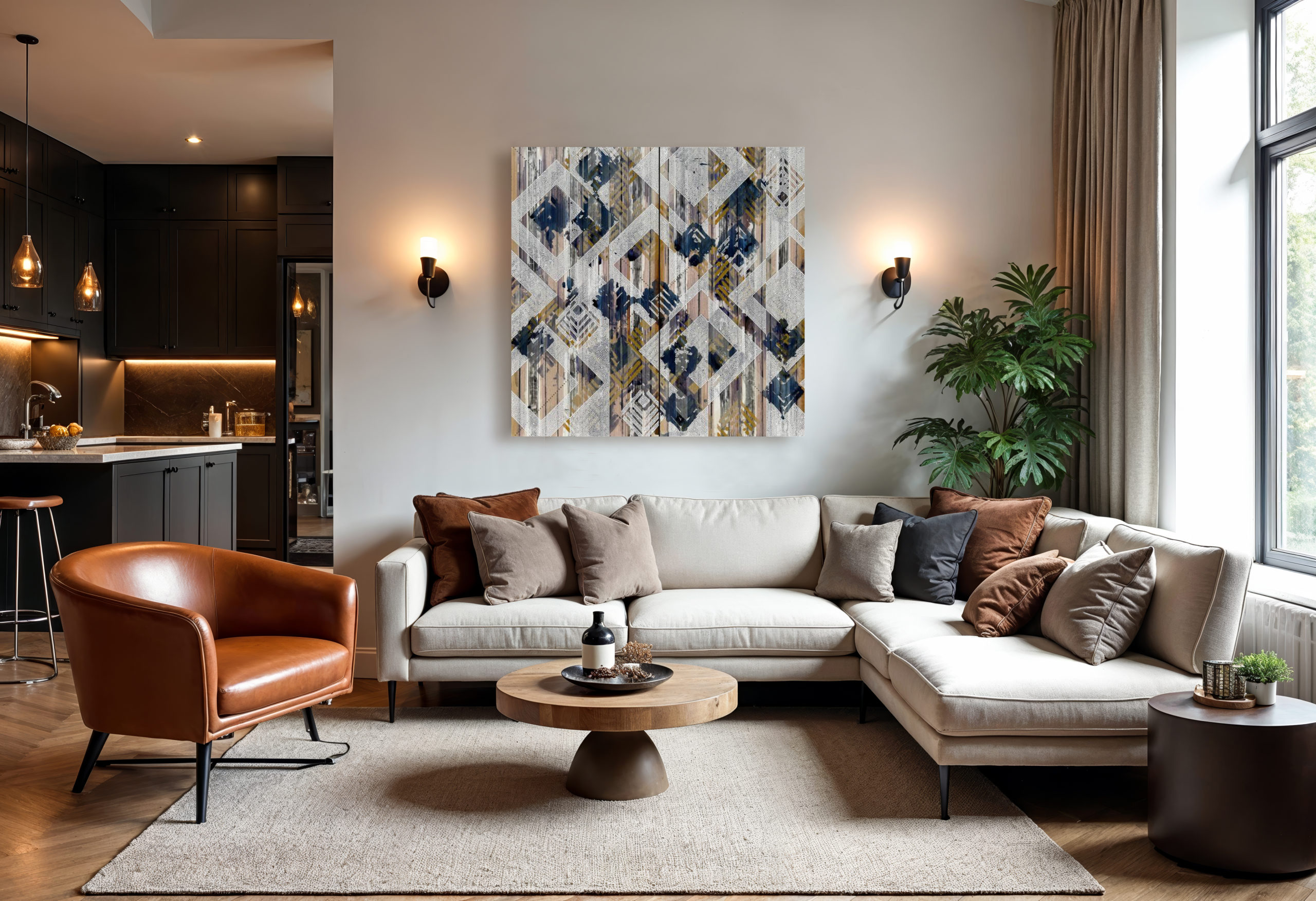
Nina Tichava, “Like a Song With No End,” mixed media, 60″ x 60″
Craft Focused Design that Doesn’t Shout – Architectural Digest observes that in 2026, craftsmanship is communicated with a quieter confidence, where quality is felt through materials, finish, and restraint rather than overt display. Nina Tichava’s mixed media work “Like A Song With No End” reflects this sensibility through its layered diamond patterning and a palette of white, ochre, brown, and deep ink blue, revealing a practice rooted in patience, balance, and subtle complexity. Within a warmly lit living environment, the piece settles naturally into its surroundings, its hand-worked surface offering depth through nuance and intention. In this way, the artwork exemplifies a craft-forward approach that values longevity and presence, allowing skill to resonate with quiet assurance.
PICTURE THIS:
RICH DARK BLUES MAKING A COMEBACK
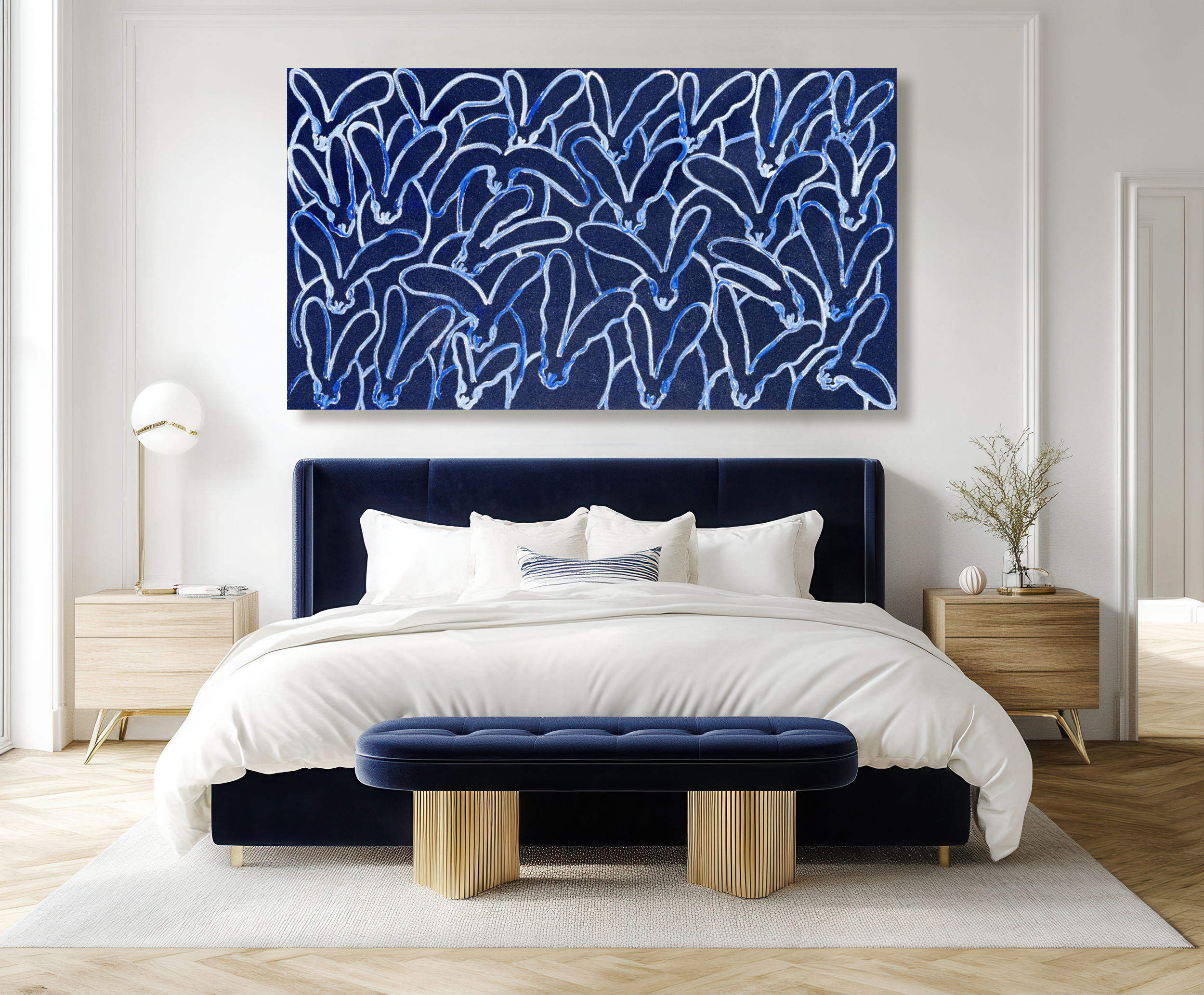
Hunt Slonem, “Blue Moon (Diamond Dust),” oil, 44″ x 78″
Rich Dark Blues Making a Comeback – Architectural Digest highlights a return to rich, dark blues in 2026, noting their ability to function as grounding neutrals that offer depth and calm in place of black or gray. Hunt Slonem’s “Blue Moon (Diamond Dust)” captures this sensibility through its saturated royal blue ground, where overlapping bunny forms shimmer in diamond-dust white, creating a surface that feels both meditative and luminous. Set within a light, airy bedroom palette, the deep blue reads as enveloping rather than heavy, its richness echoed by nearby velvety navy accents. The result is an interior moment that feels intimate and serene, demonstrating how dark blues can anchor a space while remaining quietly expressive.
PICTURE THIS:
GLOSSY LACQUER FINISHES RETURNING
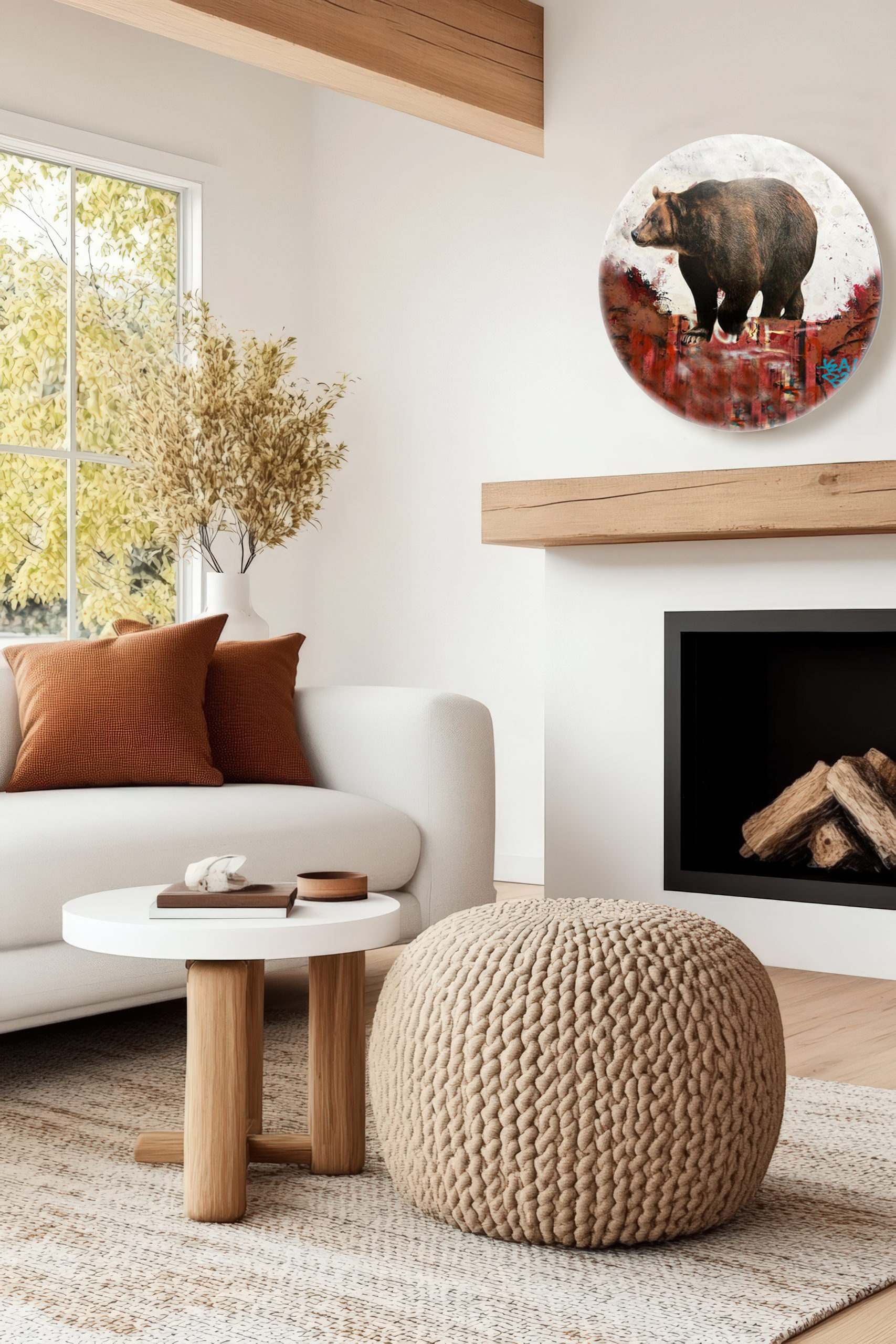
Glossy Lacquer Finishes Returning – Architectural Digest notes that while matte finishes still have their place, 2026 will see a renewed appetite for glossy lacquer surfaces that introduce reflectivity, depth, and a sense of intentional drama. KOLLABS’ mixed media work “Benjamin” captures this momentum through its high-gloss epoxy resin finish, which transforms the circular composition into a luminous focal point. The reflective surface heightens the contrast between the grizzly bear’s graphic presence and the expressive red marks beneath, allowing the artwork to interact dynamically with surrounding light and warm materials. In this context, the sheen feels purposeful rather than nostalgic, offering a contemporary nod to Art Deco glamour while grounding the space in modern artistry.
Written by Veronica Vale
Posted in Gallery News
 Miles Glynn's "Ride West"
 Your Birth Month, Your Art: January-April
 In the Studio: Kenneth Peloke