November 6th, 2026
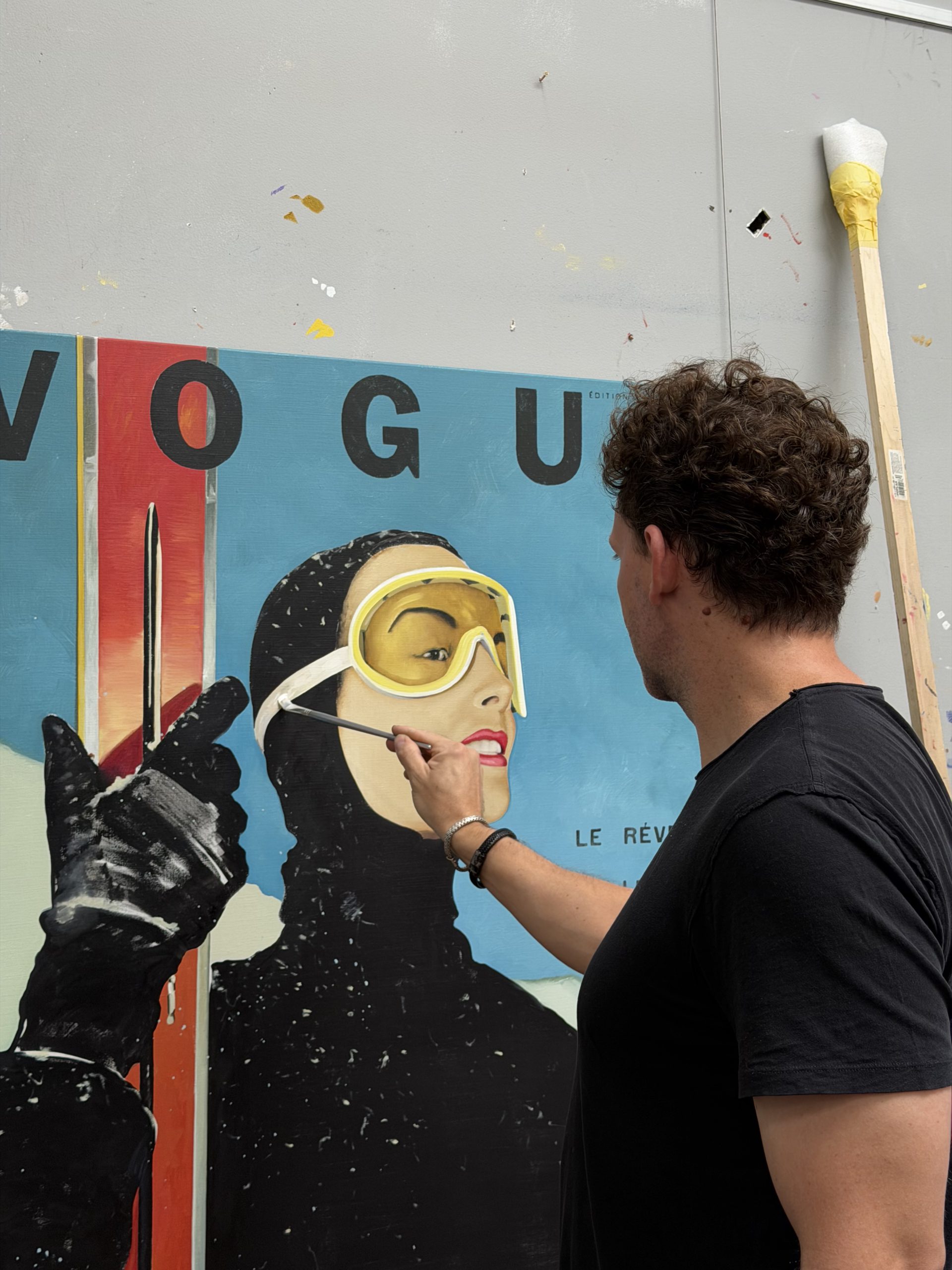
Artist Geoffrey Gersten working in his studio
There is a particular kind of magic in the things we almost throw away: a matchbook tucked into a drawer, a faded photograph, a forgotten box whose colors somehow remain vivid after seventy years. In Geoffrey Gersten’s hands, these remnants of another America become something altogether more luminous. A painter of hyperrealist detail and unexpected whimsy, Gersten returns to the visual language of the 1950s not simply to revisit the past, but to find new possibilities within it. His upcoming exhibition, “50s Fabulism,” opening November 27th at Gallery MAR, brings together vintage imagery, found objects, and meticulously rendered still lifes in a world where nostalgia gives way to surprise.
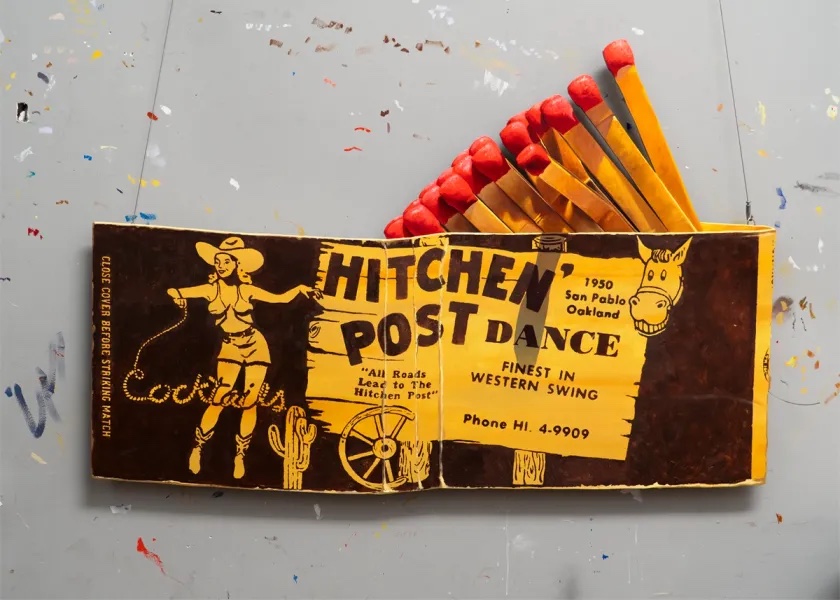
Geoffrey Gersten, “Hitchen Post,” oil, 40″ x 59.5″
For Gersten, matchbooks are more than charming relics of midcentury design. Each carries the imprint of a place, an occasion, and a life once lived. “These little 1950s matchbooks evoke a place and a time and an experience,” he explains. A tiny dancing figure, a nightclub’s name, or an unexpectedly witty phrase can open a window into an imagined evening decades ago. “It’s this really charming little trinket, like a little treasure that I have.” What might otherwise be discarded becomes a small, tangible piece of cultural history – one that still seems to hold the warmth of the hand that saved it.
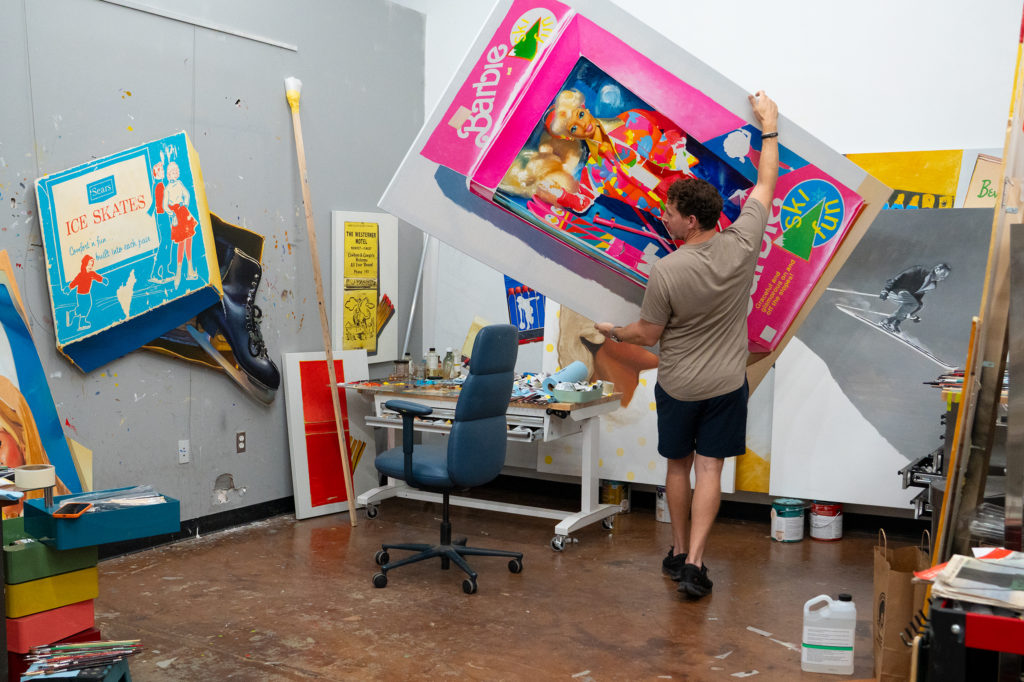
Gersten arranging work in his studio
Gersten’s studio is filled with these discoveries, gathered from antique malls and passed along by people who have held on to matchbooks from their grandparents or family travels. His process is as much about looking as it is about painting. Sometimes he arranges objects with painstaking care; sometimes he lets them fall where they may, making small adjustments until a composition begins to breathe. And sometimes the image arrives almost fully formed. “I think with all things in life, and especially with painting, you need 50% planning and then 50% intuition,” he says. “If you have too much planning, it’s going to be static.” That delicate tension between intention and spontaneity gives the work its distinctive liveliness: familiar objects take on new significance, color feels freshly discovered, and realism leaves room for playfulness.
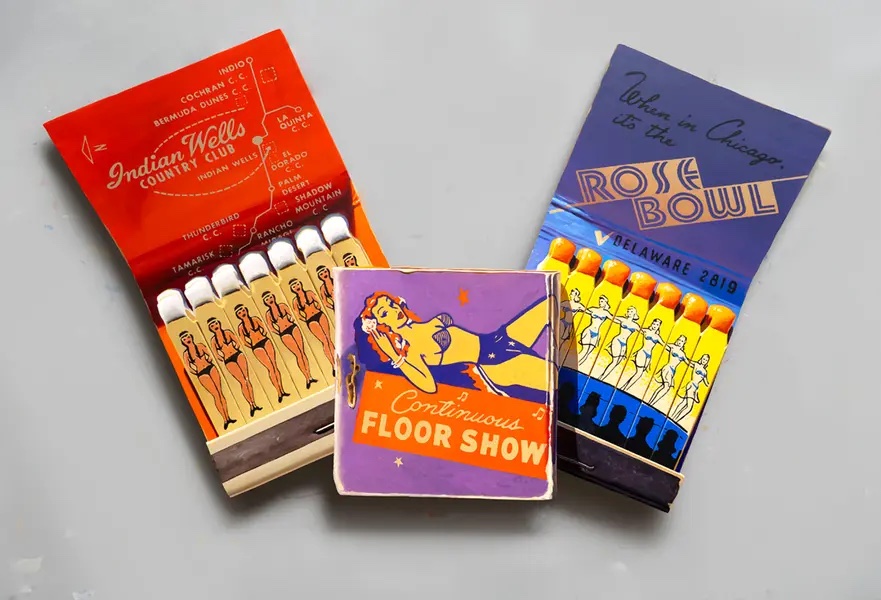
Geoffrey Gersten, “Continuous,” oil, 40″ x 66″
As a self-taught artist, rather than following a prescribed path, Gersten charted his own course, learning through art history. He immersed himself particularly in the work of the Dutch Golden Age painters whose mastery of light, detail, and composition continues to inform his practice. His own paintings now similarly reward a closer look. From a distance, an image may feel crisp and almost photographic; up close, the richness of the paint reveals itself in the brushwork, glazes, and subtle shifts of hue.
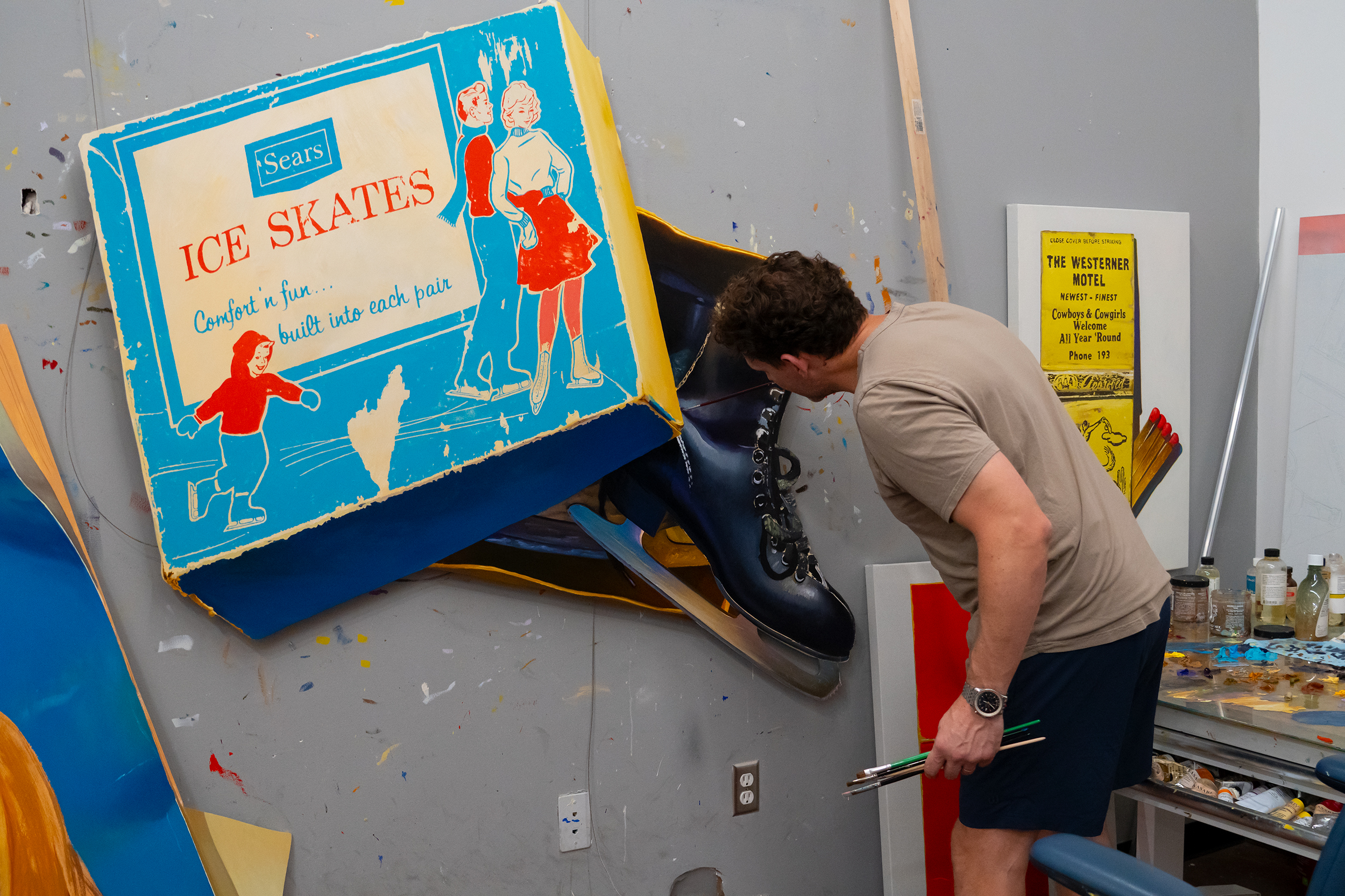
Gersten working on a new piece featuring vintage ice skates for Gallery MAR
Inspired by the chiaroscuro of the Dutch oil painters and black-and-white photography of the twentieth century, black-and-white imagery has long appealed to Gersten, especially for its ability to distill a scene to light and contrast. But after years of working in monochrome, he found that his relationship with color had grown rusty. To find his way back, he borrowed an idea from an entirely different kind of habit. “I once heard with bad habits, and we can say with smoking or other things, the only way to quit your habit is cold turkey,” he explains. So he decided to apply the same principle to painting: no more color-matching exercises or carefully prepared swatches. Instead, he began each new work with a blank canvas, mixing and applying paint directly on the canvas with his brush. “The more I did it and the more I did it and did it and did it forever, I started to remember which little pigments make which little changes,” he says, referring to the subtle shifts in hue that give an image its convincing sense of light and atmosphere. “And so just forcing myself to do it seemed to work eventually.”
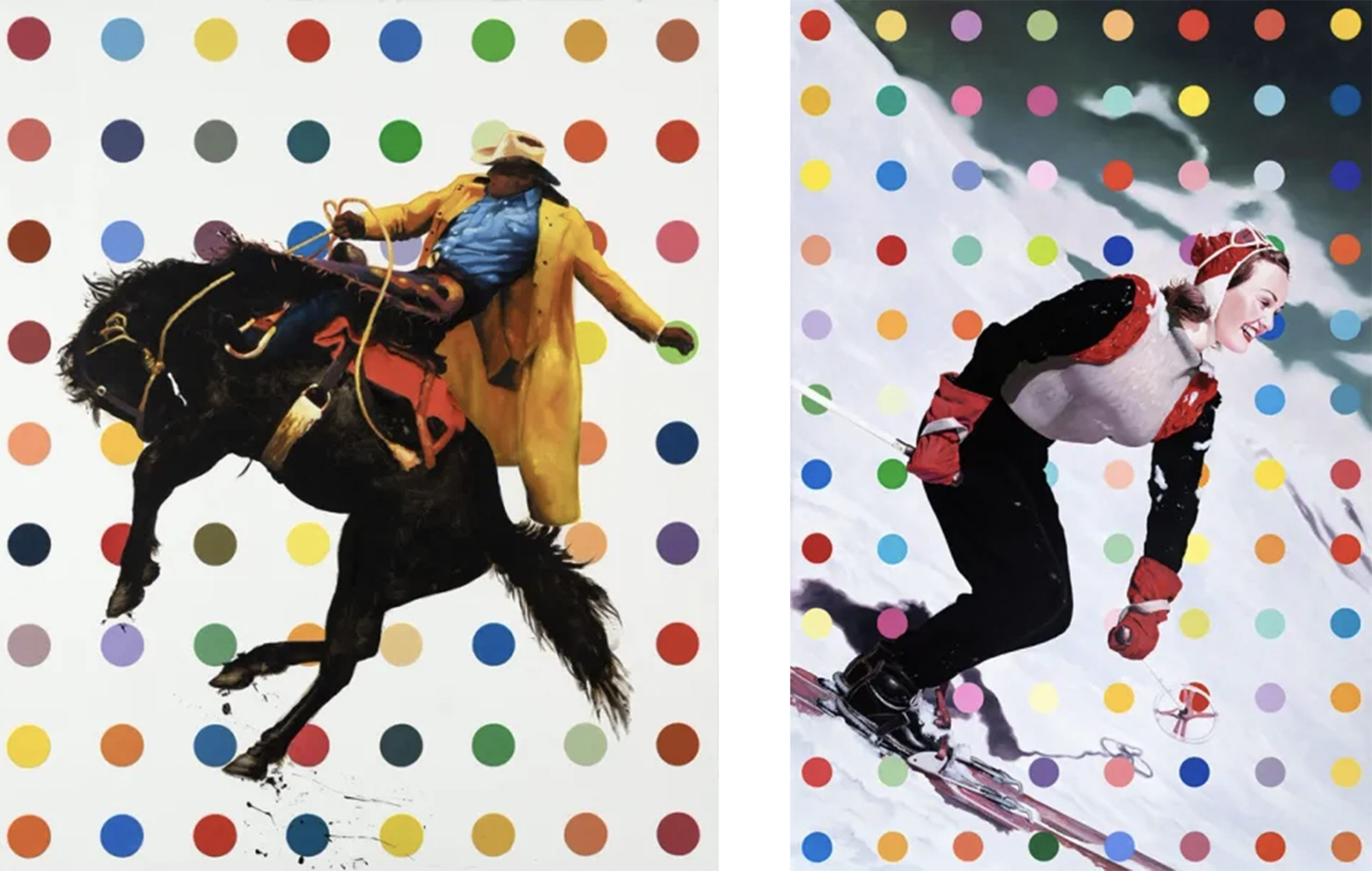
Left to right: Geoffrey Gersten, “Yellowjacket,” oil, 72″ x 60″ | Geoffrey Gersten, “Champagne Snow,” oil, 72″ x 48″
There is a lovely irony in this particular form of artistic rehabilitation: the painter who turned to the language of quitting smoking to rediscover color is now immersed in a world of vintage matchbooks. The result is a palette that can move from restrained black and white to jewel-like brilliance, sometimes punctuated by playful polka dots and other pop-inflected flourishes. In his exhibition “50’s Fabulism,” that history of black-and-white imagery, jewel-like color, and playful experimentation comes together in a palette that feels at once nostalgic and entirely his own.
Western imagery, too, finds a place in Gersten’s visual vocabulary – not as an advertisement for a particular lifestyle, but as an enduring symbol of independence and adventure. He is fascinated by the way cowboy imagery captured the imagination beyond the products once used to sell it. Across “50’s Fabulism,” that same curiosity animates the objects and images he chooses: what makes an image linger, and how can it be made to feel new again?
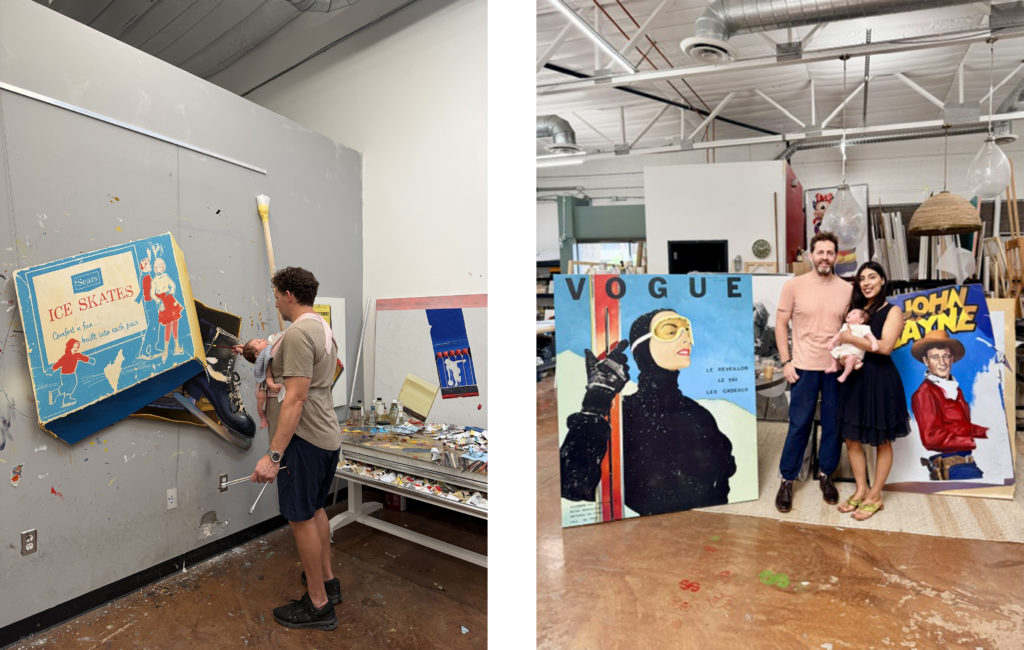
Left to Right: Geoffrey Gersten working on a piece for his exhibition at Gallery MAR with his newborn baby asleep on his chest | Geoffrey Gersten with his wife, Victoria, and baby, Leonardo, in his studio
There is also a more personal question beginning to accompany Gersten’s work. Since becoming a father this year (his son will be just 3 months at the time of the exhibition opening), Gersten has started to imagine his paintings through the eyes of his son, who may one day encounter them as a record of his father’s life. “I now view every single painting as something which he will someday see,” he reflects. Having lost his own father, a welder whose life he now remembers partly through the objects and tools he left behind, Gersten understands how much a person’s work can become a form of remembrance. His paintings, in turn, may someday offer his son a way to better know him – not only through the images themselves, but through the care, curiosity, and hours of looking held within them.
For Gersten, a painting should reward both the first glance and every one thereafter. He hopes his work catches the eye from afar, and reveals the labor and pleasure of its making up close. As he puts it, “I love the surface of a painting. I love to see the brushwork. I love when an artist ‘shows their work’.” In “50’s Fabulism,” that devotion meets a world of vintage charm, vivid imagination, and quiet emotional resonance. The past may be the starting point, but in Gersten’s hands, it is never simply where the story ends.
Written by Veronica Vale
 Geoffrey Gersten's "50s Fabulism"
 Laura Wait at the Vashon Arts Center
 Picture This: Autumn Reverie