June 11th, 2026
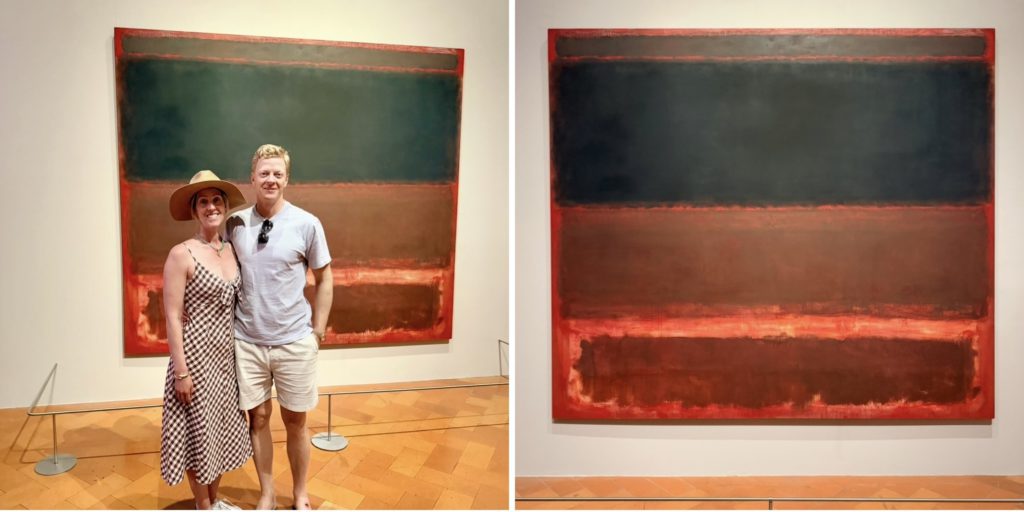
An untitled piece by Mark Rothko, in the “red and brown” room of Palazzo Strozzi, Florence.
What an extraordinary visit to Italy this has been for me (owner Maren Mullin) with my family and visiting with friends. Although we did not spend the night in Florence, we were able to pop into the city with our (oversized) car, find a parking place, and scurry over to the Palazzo Strozzi to view this important exhibition. The son of Rothko, Christopher, was the mind behind the exhibition, and the works have been collected from all over the world — as well as from his collection and his sister Kate’s collection. The show was photographable, save for one piece on loan from a museum in the Netherlands. In this blog you will see photos from my Iphone camera — apologies for the less-than-professional pics!
In case you will be in the area, here are more details from the Palazzo Strozzi website, about the exhibition:
From March 14 to August 23, 2026, Fondazione Palazzo Strozzi presents one of the most important exhibitions ever dedicated to Mark Rothko (1903-1970), the undisputed master of American modern art. Curated by Christopher Rothko and Elena Geuna, Rothko in Florence is a unique project conceived specifically for Palazzo Strozzi to celebrate the artist’s special bond with Florence. The palace’s architecture and the city itself provide the ideal backdrop to explore how Rothko translated the tension between classical measure and expressive freedom into painting, creating through color a new perception of space that transcends the two-dimensionality of the canvas.
The exhibition at Palazzo Strozzi traces Rothko’s entire career with over 70 works from prestigious private collections and leading international museums, including New York’s Museum of Modern Art (MoMA) and Metropolitan Museum of Art, London’s Tate, Paris’s Centre national d’art et de culture Georges-Pompidou, and Washington’s National Gallery of Art.
From Palazzo Strozzi, the project extends into the city of Florence, through two special satellite interventions at locations particularly significant to the artist: the Museo di San Marco, where a selection of works will be presented in dialogue with the frescoes of Fra Angelico, and the Vestibule of the Biblioteca Medicea Laurenziana designed by Michelangelo.
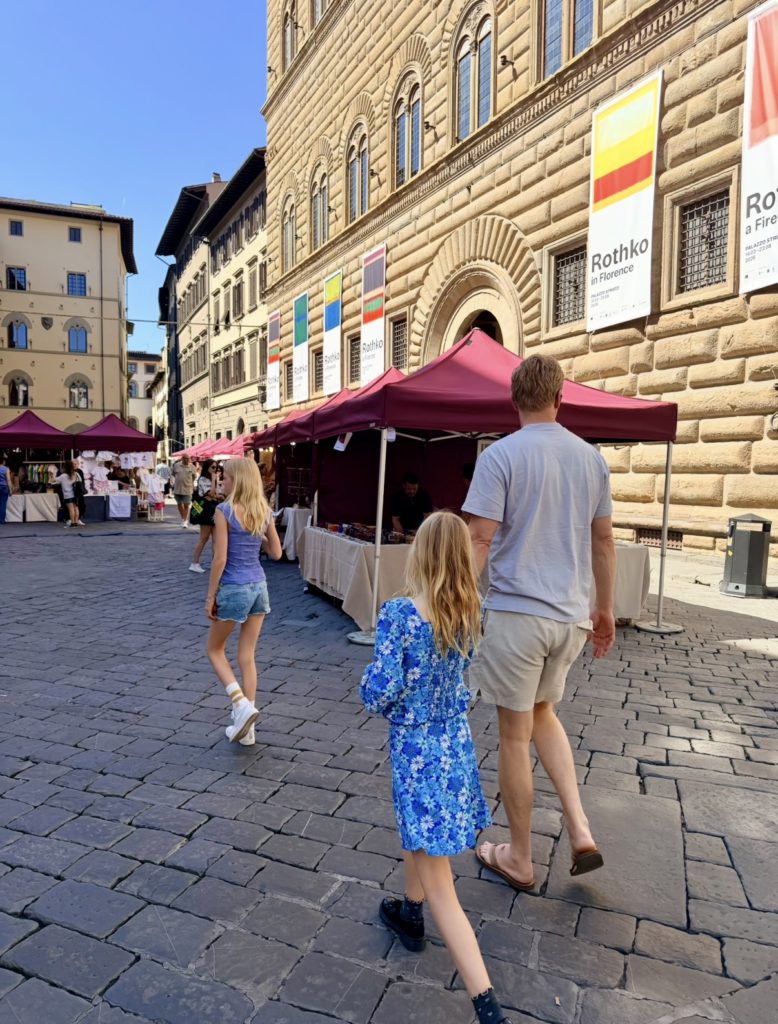
After a gelato stop, of course, approaching the museum (with my two girls and husband Matt), which has recently hosted such diverse exhibits back-to-back as Tracey Emin and Fra Angelico. Now that’s a pairing!
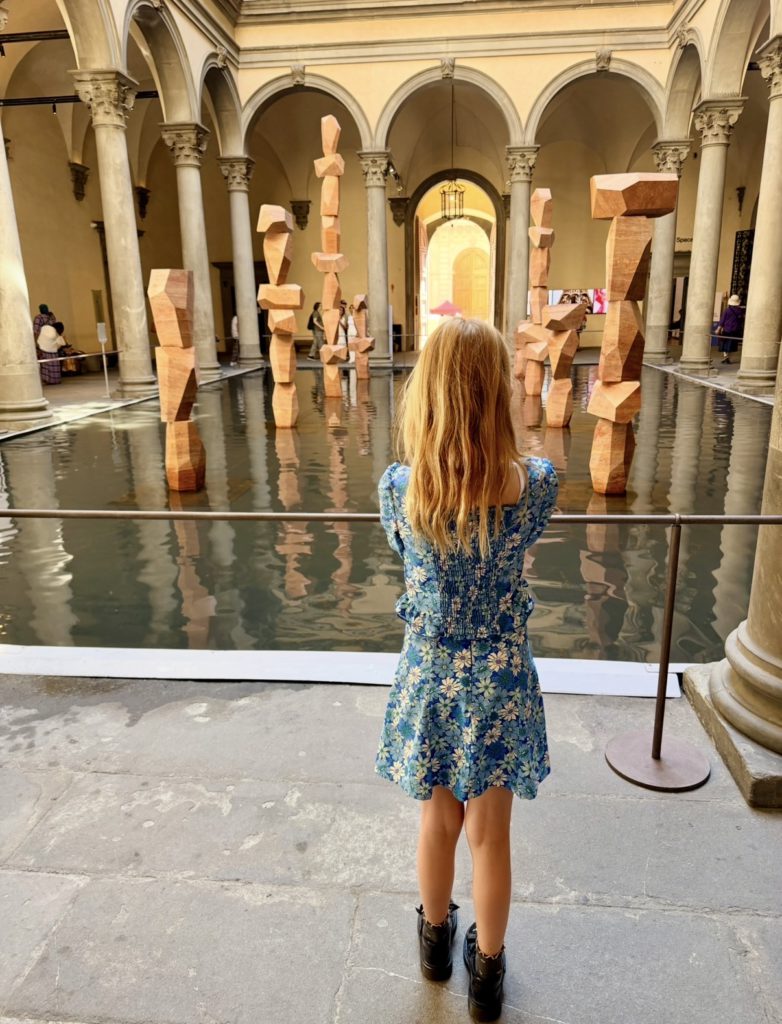
Inside the Palazzo is a sculpture installation. The water and fish installation at Palazzo Strozzi in Florence is titled “There Are Other Fish In The Sea” by the Danish art collective SUPERFLEX. The installation transforms the palazzo’s Renaissance courtyard into an immersive underwater landscape with large, pink travertine columns emerging from a pool of water, serving as future habitats for marine life — a future imagined due to ocean level rising.
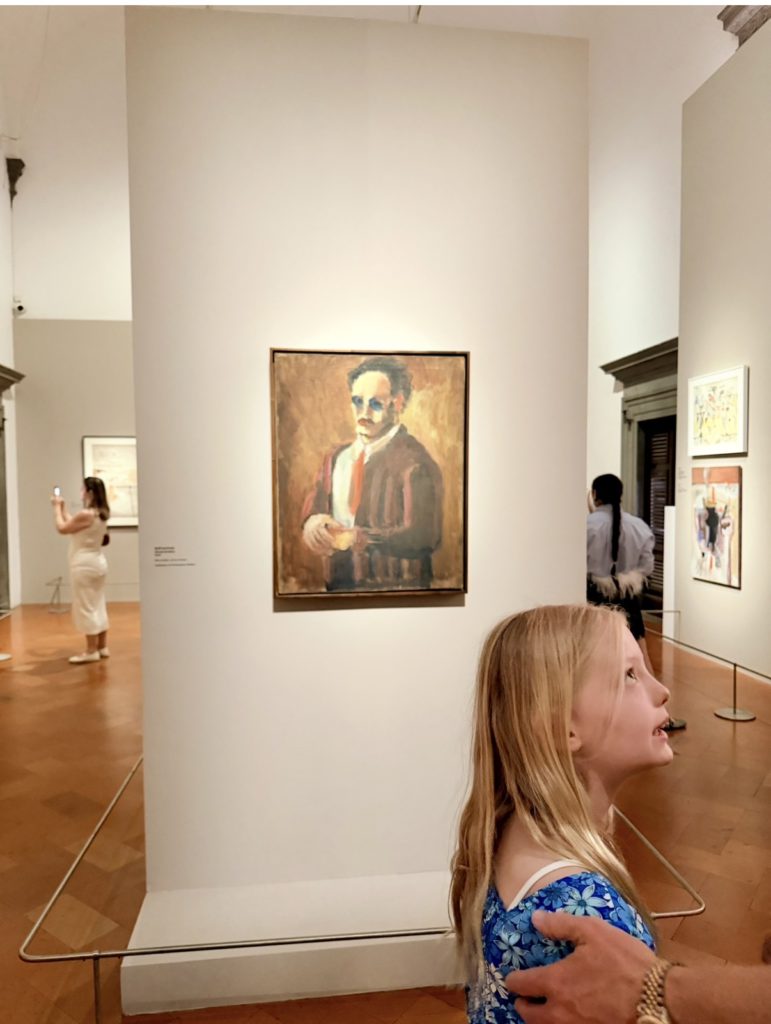
One of the first paintings in the (chronological) exhibition: the only known self-portrait by Mark Rothko, painted to show him as a blind man, turning inward for meaning. His painting began with figurative work, although there was always an architectural sense to the pieces.
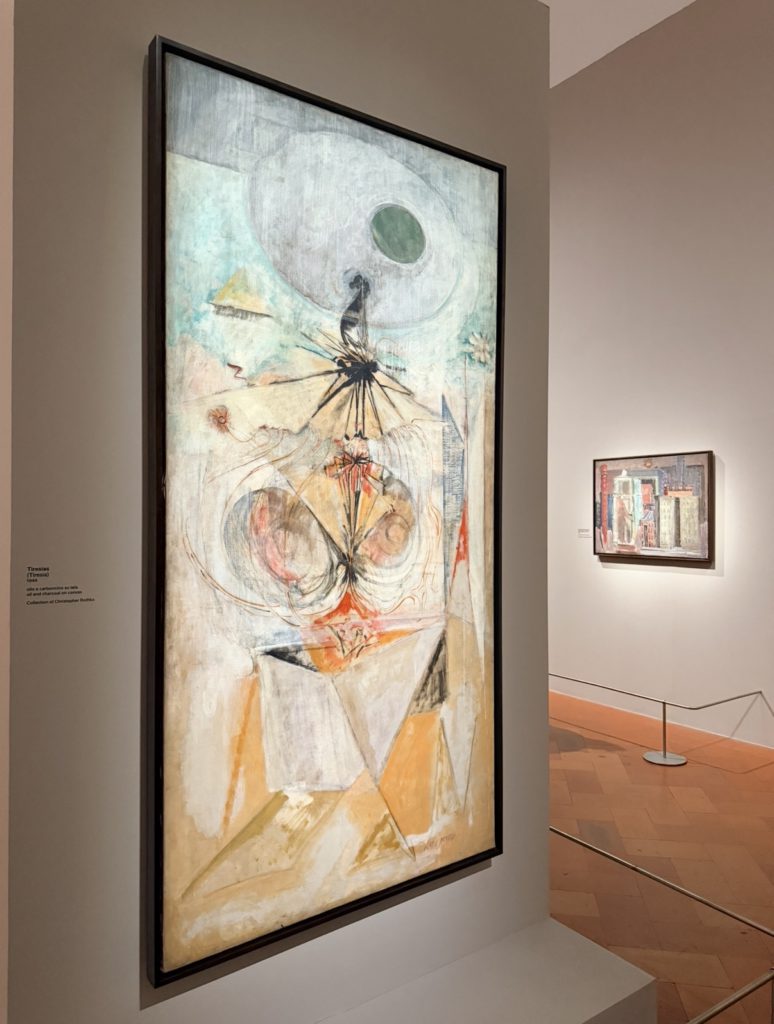
An early, figurative work by Mark Rothko, with a landscape in the background. All of these pieces are in oil with charcoal or pencil — utilizing mixed media.
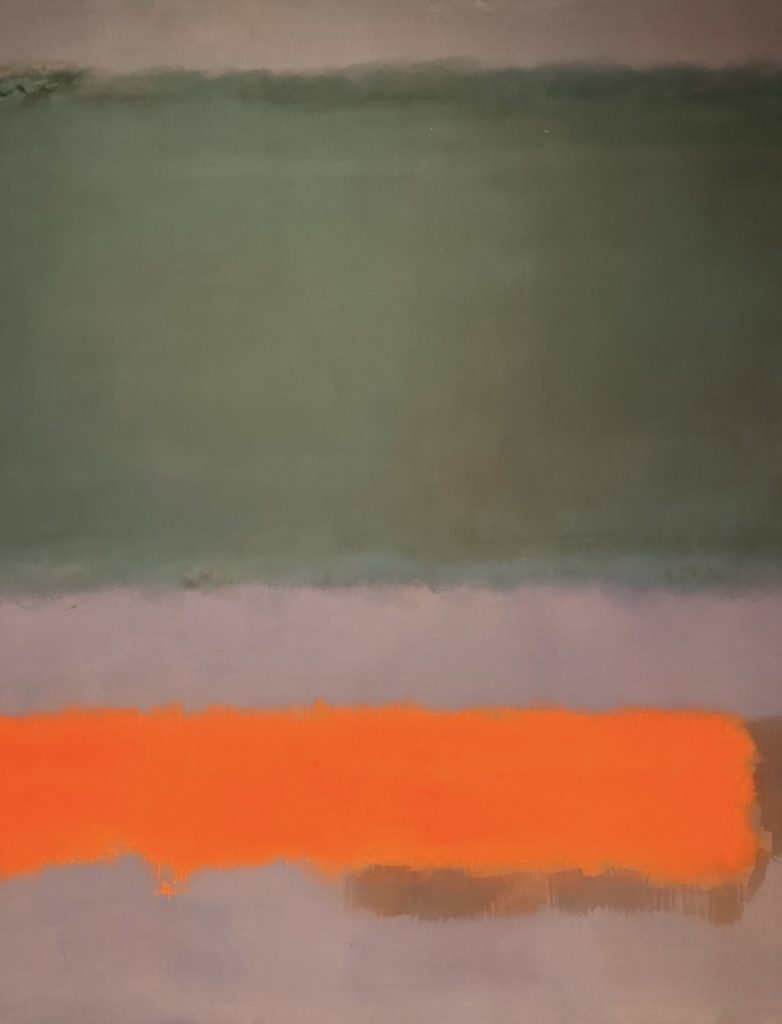
Up close and into the painting: as it was meant to be viewed. The exhibition encourages this… to a point. Each piece has a barricade and was watched by guards. Although Rothko had requested, in his later years, that his works be installed no higher then 12 inches above the ground that was not the case in this show, as the photos tell. But they did get close.
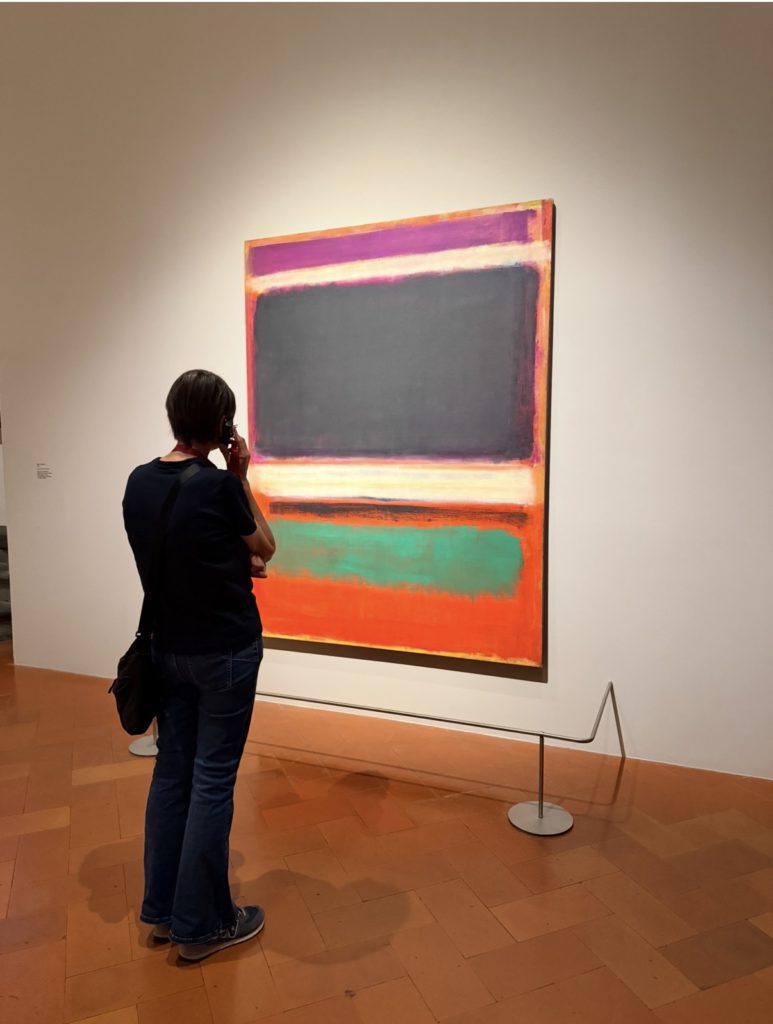
The exhibition’s cover piece: the main cover painting featured on the official exhibition materials for the Rothko in Florence exhibition at Palazzo Strozzi is Mark Rothko, No. 3/No. 13 (1949). This work features deep, stacked horizontal bands of color, primarily magenta, black, and green on an orange background. This was one of the first of his well-known color field works.
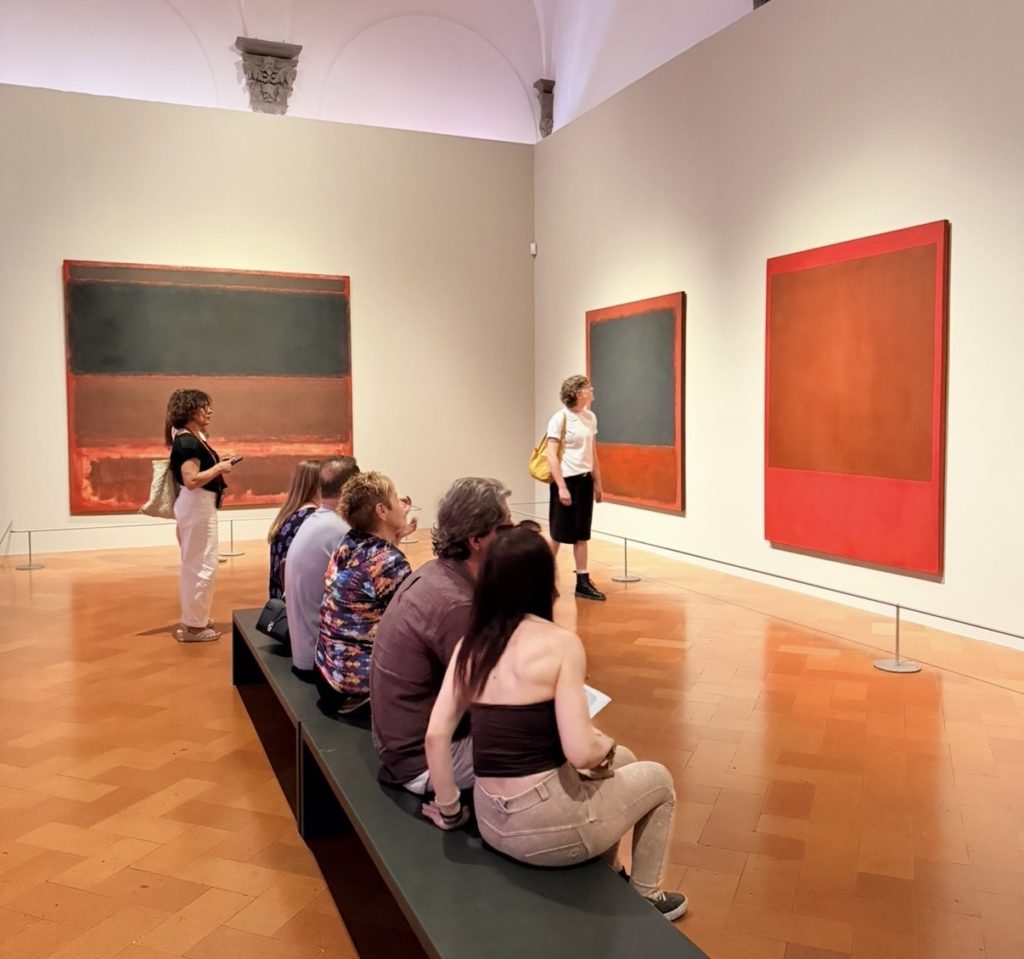
An early morning visit means a less-crowded museum. Guests took turns getting up and close to the works, and the experience was quite respectful of the work and the visitors’ needs. There was a hushed reverence in the crowd.
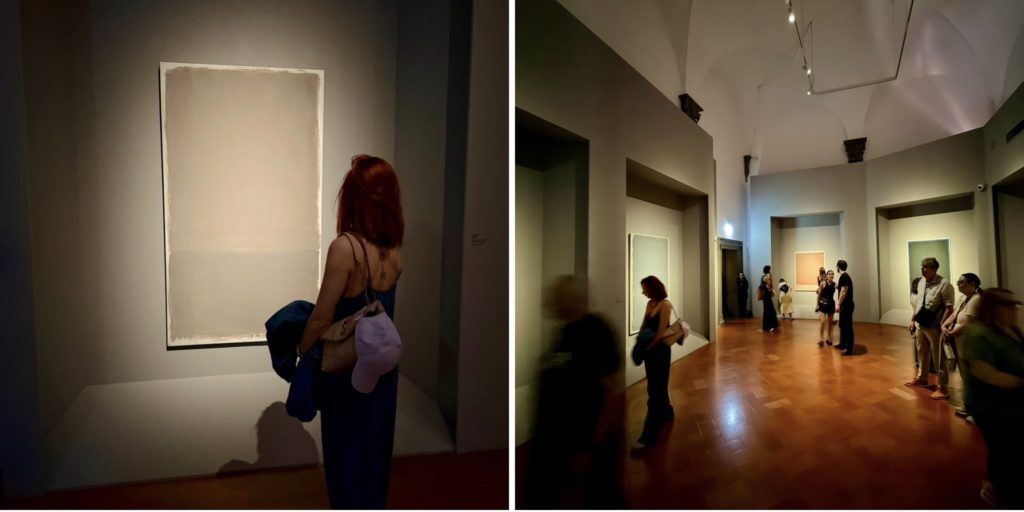
The last room, showcasing the final year of Rothko’s life: his works in water-based media such as acrylic. This was after his doctor recommended he no longer paint in oil, and just before his death by suicide. The room was set up in an octagonal shape, inspired by the Rothko Chapel in Houston, TX.
Posted in Art Insights
 Joe Norman's Multi-Faceted Steel Sculpture
 New Selections from Bridgette Meinhold
 The Photos: Where the Light Lands with LOLA and Jylian Gustlin