March 10th, 2026
We all need a “third space.”
Your home is the first. Work or school is the second. The third is the neutral, low-pressure spot where you run into your friends, strike up conversations with strangers, and simply exist without the pressure to spend money. Think: the old corner park bench, the public library room, the town square fountain on a summer evening. These spaces used to be everywhere. Now, they reside in quiet pockets, free public parks, and a small handful of pedestrian plazas — unfortunately, they’re disappearing fast. I’m Samuel Mangum, Fine Art Consultant at Gallery MAR. Let’s ask, “why?”
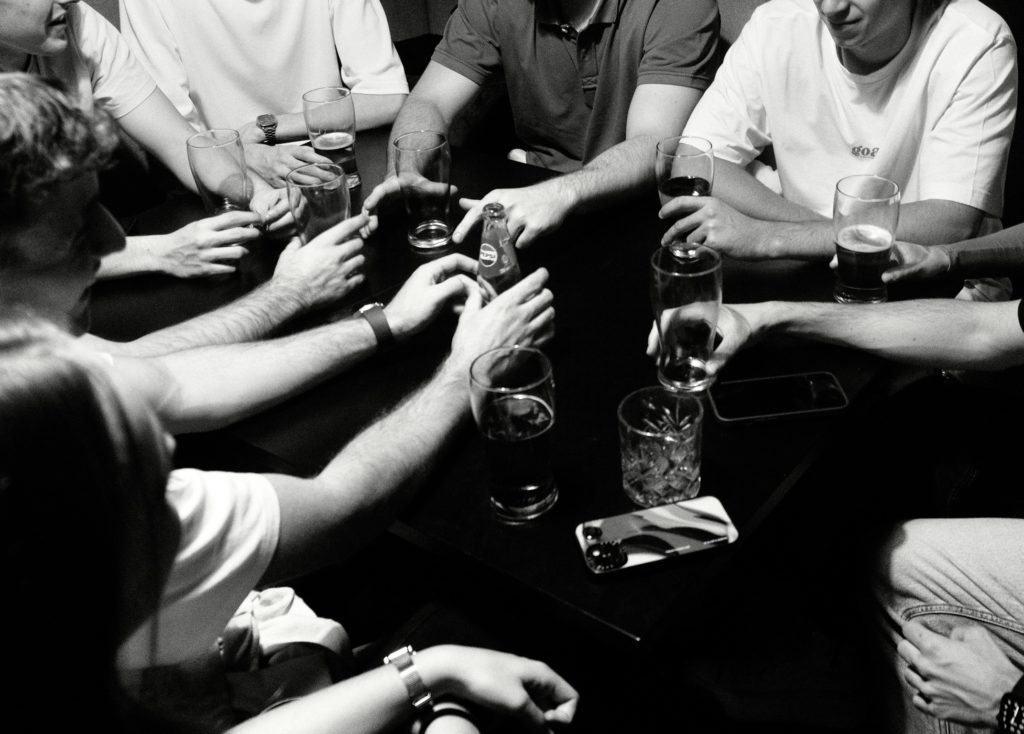
Friends gathering – 35mm B&W film – By Samuel Mangum
Free Spaces have Become Paid Places
Modern life, though full of convenience, has been engineered with an unfortunate side effect of isolation, too much private transportation, and overconsumption. Suburbs sprawling for miles with no sidewalks, benches, or gathering areas. Downtowns filled with chain stores and paid parking. Though living in this day and age has allowed for excellent economic growth, symptoms of “late-stage capitalism” have turned every square foot of populated areas into a revenue opportunity.
Even the common “3rd place bench,” something so simple and so vital to provide a place to gather and relax, has been altered to have spikes, and separators which deter use, and inconvenience the unsheltered. Parks have been centered around concession stands, libraries cut hours, and malls replaced public squares and gathering spaces as the default hangout, needing to centralize the experience around spending, and not around gathering. What was meant to introduce growth to an area, has brought a problem where everywhere you go costs money.
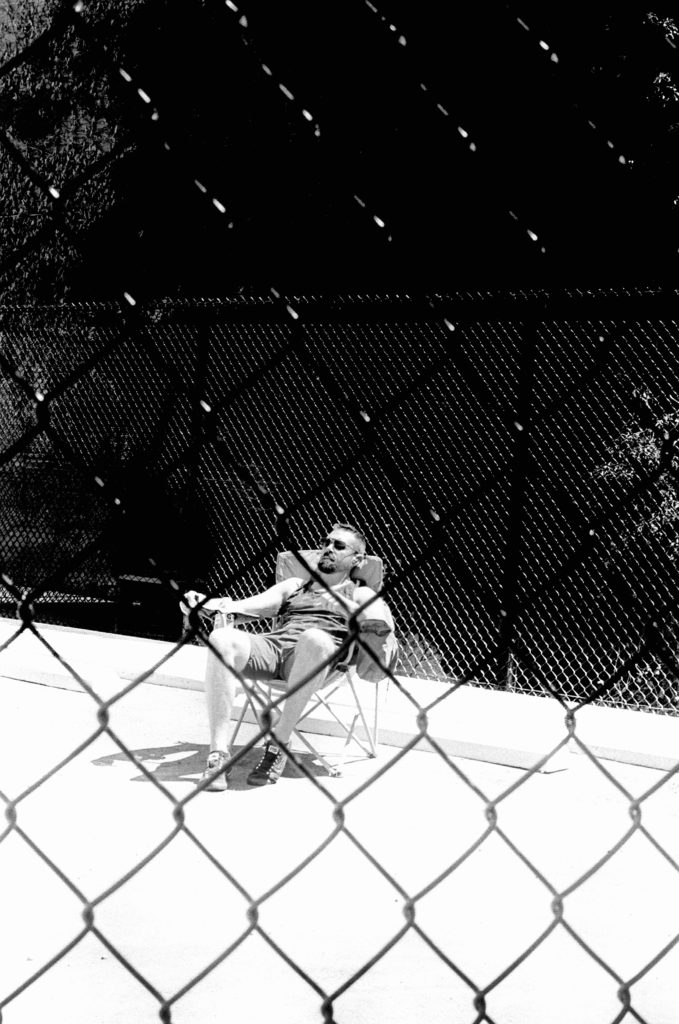
Lack of a Third Space – B&W 35mm Film – by Samuel Mangum
Without third spaces we lose serendipity, belonging, and the casual social glue that holds communities together. Third spaces aren’t meant to be luxuries; they are the living rooms of the public, and the front porches of societal friendship. Making them a priority in building our spaces will fight mental illness, strengthen civic life, and children will grow up believing interactions do not have to be monetized.
The Good News
Even as truly free public spots dwindle, some semi-public or low-cost places still function as third spaces when we claim them intentionally. Independent coffee shops often welcome lingering with a single small purchase, or none at all; offering a place to meet with friends, work, or relax with a book. Art galleries, (one I am biased towards) offer an exceptional host of openings where mingling is the focus and not spending. Being surrounded by endless sources of inspiration and conversation makes art galleries a great place to gather and make new connections. Bars even, especially dive or neighborhood locations, can become community hubs for regulars who nurse one drink for hours or just come for the energy. These options aren’t perfect — but people treat them as extensions of the commons, lingering, conversing, and building connections.
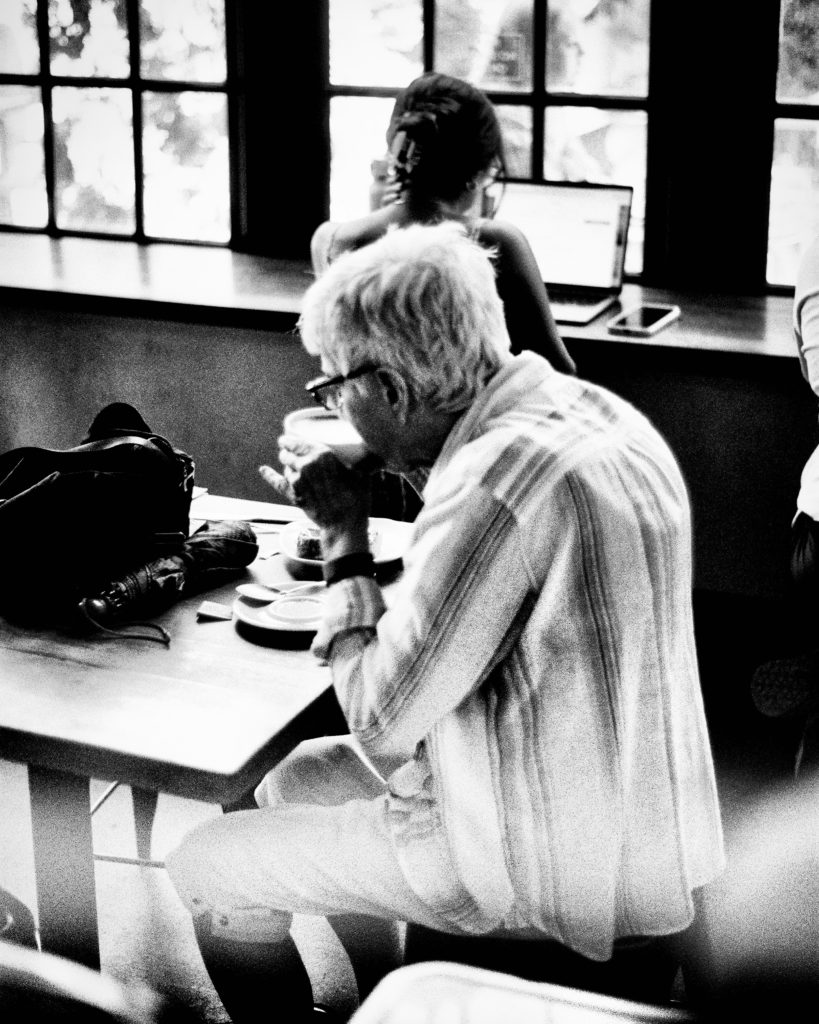
Sunday Coffee Shop – 35mm B&W Film – By Samuel Mangum
Something I’ve noticed while traveling is that so many people dream or love living in massive old cities, where your interactions with people are commonplace. You commute to work on a train, eat lunches on a bench outside, and spend your evenings traversing and exploring where you live. Cities like London, New York City, Paris, etc., boast abundance and a variety of overlapping spaces: sidewalk cafes spilling onto streets, pocket parks tucked between buildings, bustling walking plazas, and historic squares where people naturally gather.
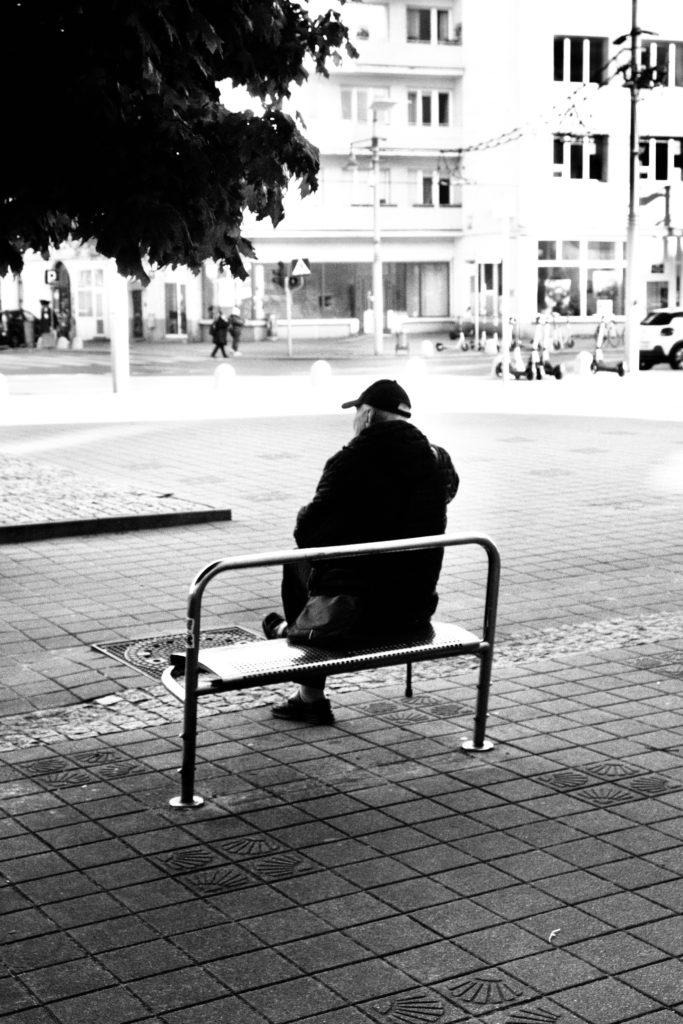
People Watching – 35mm B&W Film – By Samuel Mangum
Being Human, Face-to-Face
The density and walkability of these third spaces create constant, low-stakes encounters like bumping into neighbors, overhearing conversations, and watching street life unfold, thus, creating a feeling of belonging and purpose in where you reside. Life shouldn’t revolve around a screen, lack human interaction, or be centered around how much money you can spend in a single outing. Third spaces are the reminder that some of the greatest things in life are often free, and that we should fight to keep them as a constant in our lives.
 Joe Norman's Multi-Faceted Steel Sculpture
 New Selections from Bridgette Meinhold
 The Photos: Where the Light Lands with LOLA and Jylian Gustlin